
Why Your Horse Keeps Knocking Rails
Jul 29, 2026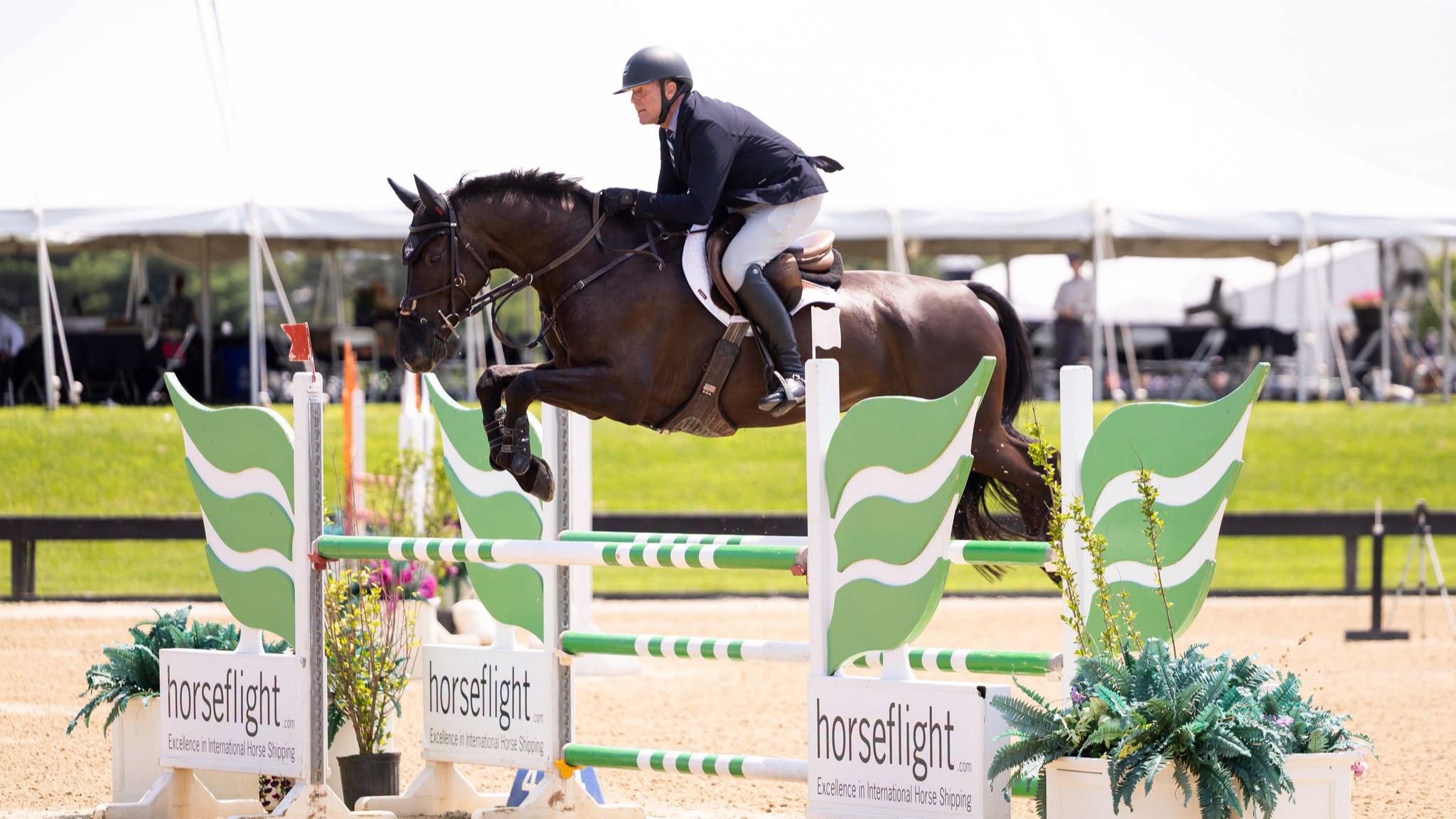
By Peter Wylde — Olympic team gold medallist, World Equestrian Games individual bronze, and Boyd Martin Eventing Program showjumping coach
Quick version: When an eventer knocks rails, gets shy, or jumps flat in the showjumping ring, the cause is often the rider's hand rather than the horse's scope. A horse needs to stretch its neck down and forward to round its back over a fence, and a hand that holds on through the air shuts that motion down. Free the neck, and most of the other problems start to fix themselves.
I have watched thousands of horses jump, and the same fault keeps showing up
When a horse keeps having rails, runs out of confidence, or jumps with its head in the air and its back hollow, the first place I look is almost never the horse.
I look at the rider's hands.
The horse can only use its body as well as you let it, and most riders, without meaning to, hold on at the exact moment the horse needs to be set free.
Why does freeing the neck matter so much over a jump?
A horse jumps with its whole topline. As it leaves the ground it lowers and stretches its head and neck forward, which lifts the back, brings the hindquarters underneath, and lets the front end fold up and out of the way. That arc has a name in our sport, the bascule, and it is the difference between a horse that floats over a fence and one that scrambles across it. The neck is the steering arm of that whole motion. If the horse cannot reach forward and down with its head, the back stays flat, the shoulders stay stuck, and a rail comes down even when the horse tried its heart out.
Now picture what happens when the rider's hand stays fixed, or worse, pulls back a touch for security as the horse takes off. You have just tied down the one thing the horse most needs to move. The horse feels the bit say "wait" in the air, it shortens its neck, the back drops, and the legs hang. Over time a clever horse stops trusting the distance altogether and starts adding a little stutter step, getting shy, or backing off. That hesitation people read as a confidence problem is very often a freedom problem in disguise.
What is a following release, and why do top riders live by it?
A following release simply means your hands travel forward with the horse's mouth as it jumps, keeping a soft, even feel on the rein without ever blocking. You are following the motion, not creating it and not restricting it.
When you watch the riders I came up admiring, McLain Ward, Joe Fargis, Meredith Michaels Beerbaum, the thing they all share is unbelievably quiet, generous hands over the fence. The horse is never punished in the air for the rider's nerves. That quietness is a skill, and it is trainable.
The reason a following release is so powerful for eventers in particular is that cross country rewards a slightly different instinct. Out on a course you sometimes do hold and balance and ride defensively, and that is correct out there. But carry that same defensive hand into the showjumping ring and the delicate poles start falling.
Many eventers are not jumping badly in the showjumping phase. They are jumping cross country technique at showjumping fences. The hand that keeps you safe across the country is the same hand that pulls a rail in the arena.
Why do eventers tend to jump "at" a fence instead of "up and back"?
There is a pattern I see constantly with event horses. They learn to jump forward and across a fence, because that gets the job done out on a bold cross country track. In the showjumping ring you want the opposite shape. You want the horse to jump up and back, to rock onto its hocks, lift the front end, and make a tall, careful arc that leaves the rails alone. A horse that jumps "at" a fence is fast and brave but flat, and flat horses touch poles.
Retraining that shape is real work and it is best done with carefully built exercises and an experienced eye, which is exactly the kind of thing we do together inside the Boyd Martin Eventing Program. But the principle you can take away today is this: you are not trying to make your horse braver, you are trying to make it more careful and more adjustable.
Does rider position really impact rails falling?
It does! Two position faults knock down more rails than almost anything else.
- The first is jumping ahead, throwing your upper body up the horse's neck before the horse has left the ground, which drops weight onto the forehand at the worst possible moment and chokes off that bascule again.
- The second is dropping the eyes. The moment a rider stares down at the base of the jump, the body collapses and the horse follows the body.
The fix is a taller, more patient upper body that waits for the horse to close the angle, and eyes that look up and through to the next fence. Easy to say, hard to hold under pressure, which is why we drill it until it becomes the default rather than something you have to remember in the ring.
So what can you actually do this week?
Three things, none of which require setting up a single course.
- First, find your following release with a neck strap. Put a strap around the horse's neck, or grab a chunk of mane, and over small fences practice letting your hands go forward and rest there as the horse jumps. You are teaching your own body what "give" feels like.
- Second, get out of your stirrups on the flat. Time without stirrups, even ten minutes of trot, builds the independent lower leg and core that let your hands stay quiet when it counts. You cannot have soft hands on top of a wobbly base.
- Third, lift your eyes. Pick a point above and beyond every fence and train yourself to find it on the approach. Where the eyes go, the body and the horse follow.
Those are the doorway. The tailored part, the specific exercises built for your horse's shape, your striding, and the holes in your particular round, is the work we do together with eyes on the ground.
FAQ
Why does my horse knock rails even though it clearly has the scope to clear them? Scope is rarely the issue at the lower and middle levels. A capable horse usually knocks rails because something is stopping it from using its body, most often a restrictive hand that prevents the neck from stretching and the back from rounding over the fence.
What is the difference between a following release and a crest release? A crest release rests the hands on the crest of the neck for stability and is a great place for developing riders to start. A following release goes a step further, with the hands actively traveling forward with the horse's mouth so the contact stays soft and never blocks the motion in the air.
Will a neck strap really help my jumping? Yes. A neck strap gives you something safe to hold so your hands stop relying on the reins for balance. It is one of the simplest tools for teaching yourself to free the horse's head over a fence, and plenty of upper level riders still use one.
My horse is bold and forward, so why would it still touch poles? Bold and forward horses often jump flat and "at" the fence rather than up and back. Boldness is not the same as carefulness. A flat, fast jump clips rails even when the horse is trying, which is why rideability and a careful shape matter more than bravery in the showjumping phase.
Why does my horse jump beautifully on cross country but have rails in the ring? Cross country rewards a defensive, holding ride and a forward, attacking jump, while showjumping rewards a soft hand and a tall, careful arc. Many eventers are simply carrying their cross country instincts into the arena, where those same habits cost poles.
Is jumping ahead of the motion really that big a deal? Yes. Jumping ahead drops the rider's weight onto the horse's forehand right as the horse needs to lift its shoulders, which flattens the jump and brings rails down. A patient upper body that waits for the horse is one of the highest value position fixes there is.
Does saddle fit affect how my horse jumps? It can. A saddle that sits and balances in a way that restricts the shoulder limits how freely the front end can come up and out. Saddle position and fit are worth checking with a professional if your horse consistently struggles to lift its shoulders, though they are only one piece of the picture.
How long does it take to retrain a horse that jumps flat? It varies with the horse and how consistent the riding is, but the shape of a jump can begin to change within a few focused sessions once the rider frees the neck and the horse is given exercises that encourage a rounder, more careful effort. Lasting change comes from consistency over weeks, not a single ride.
About Peter Wylde
Peter Wylde is an Olympic team gold medallist, winning gold for the United States at the 2004 Athens Games, with an individual bronze at the 2002 World Equestrian Games and team and individual silver at the 1999 Pan American Games. He spent years competing and training at the top of international showjumping before turning his focus to coaching, including as a team coach for the United States. He coaches the showjumping phase inside the Performance Riders Boyd Martin Eventing Program.
Your next ride
If you take one idea from this into your next jump school, make it this: free the neck, and let the horse show you what it can really do over a fence. Start with a neck strap, get your eyes up, and ride a little more patient than feels natural. Then watch how many of your "horse problems" quietly disappear.
This is exactly the kind of work we do every month inside the Boyd Martin Eventing Program, building the showjumping phase that holds up when the rails actually count. Start your free 7-day trial now.
